How Did One Family Turn the Whole World Into Its Puppet? | The Rothschilds
 ICTDNBD
0
16
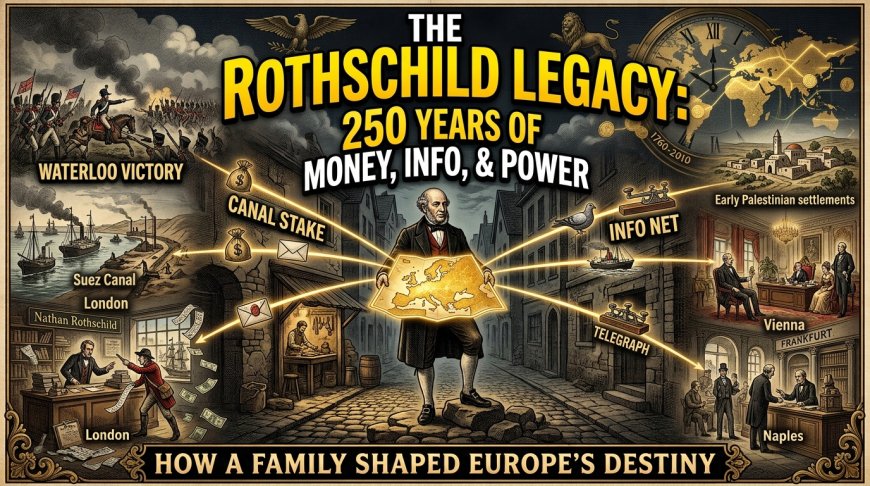
The Story of the Rothschild Family — A 250-Year Journey of Money, Information, and Power
Frankfurt in the 1760s. Mayer Amschel Rothschild was born in a narrow Jewish ghetto called Judengasse. At that time, Jews in Europe faced severe restrictions on buying land, working in many professions, and participating in the main fabric of society. Yet, from this marginalized environment, Mayer Amschel laid the foundation of a financial empire that would profoundly influence European politics and economics in the following century.
Mayer first gained experience in banking and currency exchange. Later, returning to Frankfurt, he began collecting and selling rare coins. Through this business, he made the acquaintance of William, Elector of Hesse. A few transactions involving rare coins gradually turned into trust, and Mayer became the financial agent for the royal family.
Afterward, he realized that managing and investing other people's money was a far bigger business than simply buying and selling coins.
Mayer sent his five sons to five key financial centers across Europe: Frankfurt, London, Paris, Vienna, and Naples. The goal was single-minded: to transform the family into an international financial network.
The most crucial role was played by Nathan Rothschild in London. His philosophy was simple: "Information is power." Through fast couriers, ships, and communication systems, the Rothschild family rapidly gathered critical news regarding wars, markets, and politics.
The most famous event surrounding this was the Battle of Waterloo in 1815. Popular legend claims that Nathan learned of the British victory before the general public, bought up vast amounts of government bonds, and subsequently made a massive fortune. However, modern historians argue that this story has been heavily dramatized. The reality is that the Rothschilds possessed a swift information network and maintained substantial investments in British government bonds.
After the war, the family grew even larger. They became vital financial players in European politics through the international bond market, government loans, and cross-border money transfers. Financing the British government's purchase of a stake in the Suez Canal and investing in various mines and enterprises further expanded their influence.
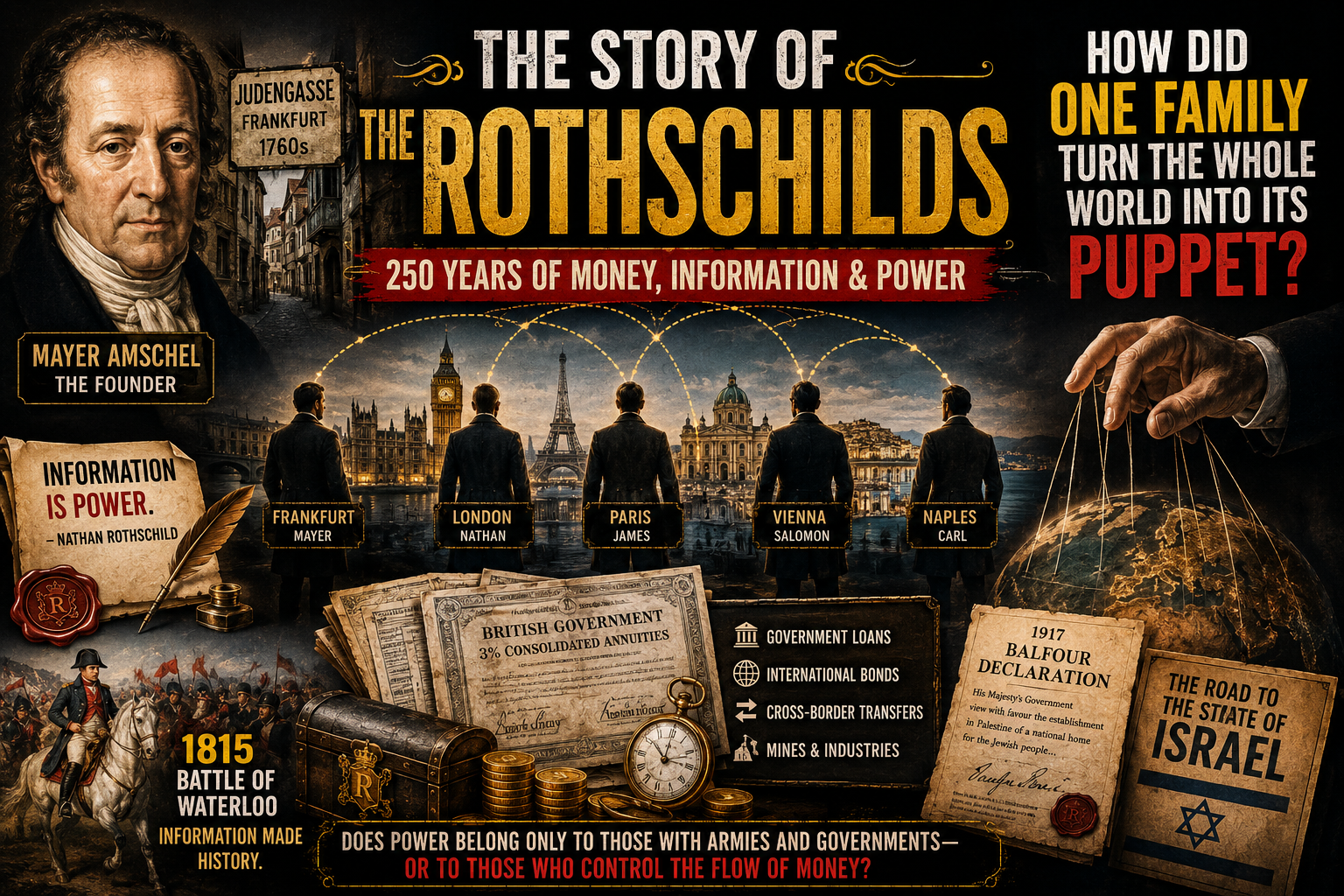
However, with immense power comes controversy. Numerous conspiracy theories arose surrounding the Rothschild family—claiming they orchestrated wars or secretly controlled the entire world. The main thesis of the story, however, is far more grounded in reality: wars and state governance require money, and the bankers who control the flow of that money naturally acquire political influence.
In the twentieth century, global wars, revolutions, and the collapse of empires shattered the old European power structures. The Rothschild family also dispersed their assets and businesses across various branches, trusts, and private institutions. As a result, accurately determining their total family wealth today remains difficult.
The most controversial chapter of the story emerges in the history of the establishment of Israel. Various members of the Rothschild family, particularly Edmond de Rothschild, played a key role in funding early Jewish settlements in Palestine. Later, the Balfour Declaration of 1917—addressed to Walter Rothschild—announced British support for a "national home" for the Jewish people in Palestine. The story highlights this event as a critical milestone in the long process leading to the creation of the State of Israel.
In the end, the Rothschild saga is not merely the story of a wealthy family. It demonstrates how money + information + international networks + political connections, when combined, can allow a family to generate extraordinary influence over several generations.
And so, the final question of the story remains:
Does power reside solely in the hands of armies and governments—or can those who control the flow of money alter the course of history as well?