Emotional Intelligence
 ICTDNBD
0
1
Today, we are discussing Emotional Intelligence (EQ). We previously mentioned that emotional intelligence encompasses four distinct types of skills. The third category is social awareness—the ability to understand what other people are thinking, what emotions they are experiencing, and why they behave in certain ways. Today, we will explore practical techniques to help you become more socially aware of others.
Speaker Introduction
My name is Ahsan Aziz Sarkar. I am a psychiatrist, researcher, and editor for a psychiatry journal. My core interests lie in psychiatry, neuropsychiatry, and behavioral neuroscience. I firmly believe that when people are provided with scientifically accurate information, they can better understand themselves. Self-understanding naturally leads to personal growth and enhanced overall well-being.
Why Social Awareness Matters
Social awareness means reading another person's thoughts, emotions, and behaviors, as well as understanding the underlying reasons behind them. Developing this skill is essential for two major reasons:
-
Building Connections: Understanding others allows you to positively influence them and build healthier, stronger relationships.
-
Self-Reflection: It helps you gauge how your own behavior impacts the people around you.
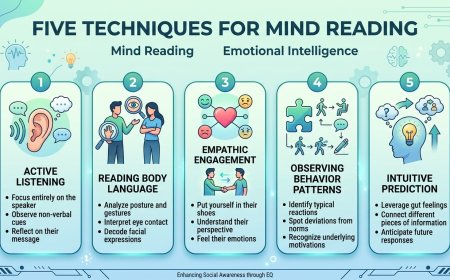
5 Practical Techniques to Read and Understand Others
1. Developing and Sharpening Empathy
Empathy is the ability to understand what someone else is thinking or feeling in a given situation by putting yourself in their shoes.
-
The Role of Mirror Neurons: Our brains contain mirror neurons that naturally activate to mimic and project the actions, emotions, and thoughts of others. For example, when watching a scary movie, these neurons trigger a fear response as if you were in the character's situation.
-
Lack of Empathy: Individuals who exhibit severe behavioral issues, criminality, or abusive behaviors often lack functional empathy.
-
How to Sharpen Empathy:
-
Active Listening: Listen attentively to understand the deeper meaning (subtext) behind their words rather than simply waiting for your turn to speak.
-
Diverse Interactions: Engage with people from various walks of life to broaden your perspective.
-
Reading Fiction: Immersing yourself in diverse literary characters helps you experience different viewpoints and emotional states.
-
Role-Playing: Temporarily adopting another person's perspective (e.g., in conflict resolution) heightens your awareness of their motives and feelings.
-
2. Mirroring (Behavioral Mimicry)
People adopt specific postures, gestures, and body angles based on their internal state. By subtly copying a person's posture or physical gestures—such as how they rest their hands or hold their position—you can stimulate similar cognitive and emotional states in yourself. Because emotional expressions are largely universal across cultures, mirroring offers direct insight into another person's current frame of mind.
3. Observing Micro-Expressions
While macro-expressions show general mood, people often mask their true feelings. Micro-expressions are fleeting, involuntary facial expressions that last for a fraction of a second, revealing underlying authentic emotions:
-
Anger: Tightening of the lips, clenching of the jaw, or narrowing of the eyes.
-
Disgust: Wrinkling of the nose.
-
Sadness: Drooping upper eyelids and slightly downward-turned corners of the lips.
(Note: Researcher Paul Ekman has conducted extensive studies and developed courses on reading micro-expressions, alongside many free online learning resources.)
4. Decoding Body Language
Postures and physical cues provide significant insight into an individual's psychological state:
-
Crossed Arms: Often signals defensive or negative emotions.
-
Hands on Hips: Indicates readiness or high confidence.
-
Hands Behind the Back: Can indicate impatience, frustration, or waiting.
-
Open Posture: Reflects confidence and receptivity.
5. Watching Silent Movies as Practice
A practical way to train your observation skills is to watch movies—especially those directed by filmmakers with a background in theater—with the volume muted. Observe the actors' micro-expressions and body language for 10 to 15 minutes, hypothesize what they are feeling or saying, and then turn the sound back on to verify your observations. Regular practice significantly enhances your ability to read people in real-life settings.
Ethical Usage
The skills gained through emotional intelligence and social awareness are designed to help you understand others deeply and refine your own behaviors. Please use these insights responsibly to build genuine connections rather than to manipulate others.